“It’s such a player’s guitar”: how the Pacifica SC is shifting the perception of Yamaha’s most popular instrument
Ad feature with Yamaha
For decades, Yamaha’s Pacifica has been a byword for quality and reliability at the affordable end of the guitar spectrum. In fact, if you’re reading this there’s a good chance that you made your start on a Pacifica guitar that offered a level of sound, playability and build that vastly outperformed its humble price tag.
But in the last few years, you’ll have noticed the buzz around the Pacifica change somewhat. Back at NAMM 2024, Yamaha revealed the brand new Pacifica Professional and Standard Plus guitars – instruments that redefined what people expected when they saw that iconic Pacifica logo on a guitar’s headstock. The new Pacificas were the result of years of research and development of the kind that only Yamaha could do – painstakingly reimagining the brand’s most successful and famous guitar for a new era, and a new type of player.
And that was the most interesting thing of all – Yamaha wasn’t just speaking to beginner guitar players to find out what they needed, they were speaking to professionals, artists: those whose experience was vast and whose requirements were exacting.
Plenty of other student-focused guitars have evolved to find themselves deployed across the biggest stages and the biggest stars – it was Pacifica’s turn. There will always be a Pacifica guitar for the beginner of course, but Yamaha knew it was time for model to spread its wings and show just how good it can be – and for 2026, this revolution is reaching a whole new level.
Single Minded
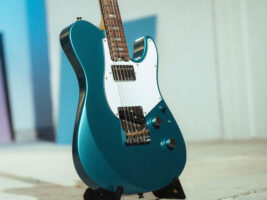
The single-cut Pacifica has been something of a cult hit among aficionados of the model. It hasn’t been a regular feature in the brand’s line-up since the late 90s, but earlier this year that changed with the launch of the Pacifica SC in both Japan-made Professional and Standard Plus configurations. Instantly, artists stood up and took notice.
In a few short months, the guitar has found its way into the hands of some of the most respected musicians in their fields, in a way that few Pacifica guitars before have done. But that’s actually quite fitting.
Because real ones will know that while the single-cut hasn’t been in the standard Pacifica line for decades, it has lived on in the shape of Yamaha’s only Pacifica signature model – the Japan-made 1611 Mike Stern. The modern SC takes the torch that jazz virtuoso Stern has been carrying for years and pushes it to another level, and he’s no longer alone in singing its praises.
One of the SC’s early adopters is Britpop legend Graham Coxon. The Blur guitarist used a single-cut guitar to craft some of the most iconic and inventive guitar riffs of the 90s, but he was also informally involved in the development of the model with Yamaha. We did say they’d been consulting with professionals… they weren’t doing things by half measures.
But Coxon’s interest in the Pacifica SC has been more than just as a consultant – he’s come to really love the guitar as he’s spent more time with it.
“The neck is very comfortable,” Coxon explains. “The guitar seems to disappear when playing it leaving nothing between you and the sound, and those Rupert Neve pickups are flipping amazing! This guitar is getting a lot of use in the studio right now.”
Another artist who’s flying the flag for the Pacifica SC is Jack Taylor from rising British indie band Corella, and as is often the case with a Yamaha guitar, the craftsmanship and consistency have helped make him a convert.
“When I first picked up the new Pacifica SC I was really impressed by the overall build quality, every detail felt as though it’d been properly thought through and designed with intention,” Jack explains. “The stand out feature for me is the playability, it’s so easy to play I’ve found myself reaching for it more and more in our live shows. The pickups also sound great, they’re super dynamic and responsive, whilst being really defined in the top end.”
Jack Taylor of Corella performing with the Yamaha Pacifica SC.
Pushing The Boundaries
That artists are falling in love with the Pacifica SC is no surprise – it’s one of the most thoughtfully and carefully designed electric guitars on the market today, with every aspect of the design contributing to the whole.
You can see it in the body itself, which is meticulously contoured for maximum comfort. It’s a far more ergonomic proposition than a traditional single-cut, while the smoothly carved neck joint heel, and perfectly balanced design provide effortless upper fret access that allows you immersive, stress-free playing.
That body also takes advantage of Yamaha’s innovative Acoustic Design technology – a process of precisely routing the body wood to maximise resonance and vibration through the neck, and thereby enhancing the sustain.
You’ll also find it in the Reflectone pickups that Coxon was raving about. Designed in collaboration with Rupert Neve Designs, these SH pickups deliver clear, articulate tones with solid lows and sparkling highs, with the EQ-shaping Focus switch adding further tone-shaping options.
Combine all this with premium hardware from Gotoh, a wonderful selection of eye-catching classic colours, and great looks, and it’s no wonder that artists are falling head over heels with the Pacifica SC.
“I love the new Pacifica SC, it’s such a player’s guitar,” enthuses Circa Waves guitarist Joe Falconer. “It puts out a broad selection of tones that are practical in almost any situation in the studio and on stage. I love how it feels in my hands and it’ll definitely be a workhorse for me on tour over the summer.”
The professionals are already getting the message, isn’t it time for you to see if the Pacifica SC can be your new workhorse too?
Find out more about the Pacifica SC at yamahaguitargroup.com
The post “It’s such a player’s guitar”: how the Pacifica SC is shifting the perception of Yamaha’s most popular instrument appeared first on Guitar.com | All Things Guitar.
Source: www.guitar-bass.net