Gibson and Baggs tackle muddy live performance sound with the new HiFi DNA acoustic pickup system
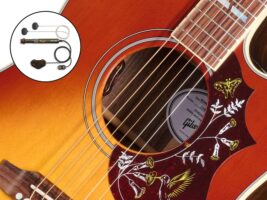
Gibson and acoustic amplification company Baggs have partnered together on the new HiFi DNA acoustic pickup system, designed to deliver “the most natural, studio‑grade live tone ever achieved from an acoustic guitar”.
The new HiFi DNA pickup is available on a wide range of Gibson acoustic guitars across its Modern and Original Collections, with a standalone version for individual purchase coming soon that can be installed via a simple peel-and-stick application.
Baggs, formerly known as LR Baggs, changed its name earlier this September as part of its 50th anniversary celebrations, to mark a new, modernised era for the company.
READ MORE: “It’s about having a space that’s big enough to tell 132 years of stories” Gibson’s Mark Agnesi on why Miami’s new Gibson Garage is its biggest yet
Gibson says the pickup is intended to close the gap between live performance and studio-quality output, marking a “major leap forward” in acoustic amplification.
It works by utilising a dual Class A preamp architecture, which treats two individual sensors as their own independent studio channel. These lighter and larger sensors run through their own custom-voiced Class A preamp before they are blended together, preserving purity and articulation in a unified output.
Overall, the system captures both string detail and body resonance with improved accuracy, meaning it reacts to the guitar as a whole instrument to produce a tone that sounds like “stepping inside the guitar” itself.
Learn more in the videos below:
“HiFi DNA is a big leap forward – dual sensors with their own independently optimised preamps keep each signal pure and deliver unprecedented fidelity with the same gain before feedback as our acclaimed Element Under Saddle Pickup,” says Lloyd R. Baggs, Founder of Baggs.
“The name ‘DNA’ speaks to our character as relentless innovators and to what this new sensor can do. It’s lighter, more flexible, and more responsive. Less mass and stiffness means more life, more breath, more truth from the guitar.”
Baggs goes on to explain, “One of the discoveries that excited me most was bringing dual preamps to market. We’ve known for years how powerful that architecture is, but it was never before feasible at scale. Now, each sensor has its own preamp stage before they’re blended, which keeps both signals pristine. If you combine two mic diaphragms – or two piezos – before amplification, they tug on each other, and the sound can get muddy. Separating them preserves every detail.
“The two sensors work almost like a pair of choir mics: each hears a different part of the instrument, with enough overlap to feel natural and enough focus to stay immediate. You get ambience without losing attack, space without losing touch. It’s a new way of hearing and capturing the acoustic guitar – clear, alive, and deeply connected to the player.”
Robi Johns, Sr. Product Development Manager at Gibson Acoustic, further states: “What we’re able to do now is capture the true timbre and full dynamic range of a real acoustic guitar – so the player’s touch, nuance, and personality finally come through on stage the way they do in the room.
“I’ve been a student of the guitar my entire life, and for decades it’s been a struggle to make an acoustic sound right on stage. In the studio, with a great microphone, you can hear the whole voice of the instrument, but live that colour and character were always compromised. The first time I heard Lloyd’s new HiFi DNA pickup, I was stunned. It felt like I wasn’t listening from a point in space anymore – I was inside the guitar. It was the solution I’d been chasing since the 1970s. For the first time, the individual personality of each guitar comes through in amplified form. It transforms the entire playing experience.”
View the full Gibson x Baggs HiFi DNA collection, or head over to the Baggs website to learn more about the company.
The post Gibson and Baggs tackle muddy live performance sound with the new HiFi DNA acoustic pickup system appeared first on Guitar.com | All Things Guitar.
Source: www.guitar-bass.net