Walrus Audio Xero Polylooper review – this could be the ultimate looper, once they get it working properly
$299/£285, walrusaudio.com
When choosing a looper, your first decision is how complicated you want it to be. Fancy something ultra-simple that you can operate with one foot? Get the original TC Electronic Ditto, a modern classic that has one knob and doesn’t even need that. Feeling more ambitious? That’s where your options get interesting… and where the Walrus Audio Xero Polylooper comes in.
READ MORE: TC Electronic Ditto 2 review: “The most easy to use looper on the market just got even better”
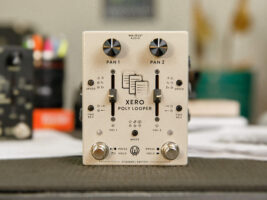
Walrus has thrown itself into the looping market with a device that offers three minutes of recording time and goes big on bonus features – including two separate recording channels with stereo panning, double/half speed and reverse modes, MIDI control (including clock sync) and more. On paper at least, this is a super-looper.
Image: Press
Walrus Audio Xero Polylooper – is it easy to use?
Here’s the basic principle of operation: hit the left footswitch once to start recording, then again to define the end of the loop, then again to overdub; hold the same switch to delete the last layer, then again to delete the whole loop. If you can’t get your head around that, you’re probably a bassist.
Pressing both footswitches moves you to the other channel, and each has a slider for level and a knob for panning. So far, so approachable… and if you want to change the speed (and octave) or go into reverse mode, you just have to tap the relevant button then hold the right footswitch.
It’s only when you start building up loops and effects on both channels that things can start to get confusing, so Walrus has added colour-coded LEDs to help you keep track. How useful that is will depend on how quickly you can learn the meanings of seven different colours. Regardless, it’s probably a good idea to start slowly and get the hang of one channel before you double up the potential for disorientation.
Image: Press
Walrus Audio Xero Polylooper – what does it sound like?
Each channel has an extra 3dB available above unity gain to provide some wiggle room as you layer up your loops, and I certainly have nothing negative to say about the audio quality. Unfortunately, that doesn’t mean the Xero is a good looper – not in its current state anyway.
The main problem is that all-important transition at the end of each cycle, where a short crossfade is required to prevent waveforms being chopped off abruptly. Good-quality loopers – even cheap ones like the Ditto – do not have a problem with this. The Xero does. All of my loops had an audible dip or bump, which showed up on recorded waveforms as a gap of around 3 milliseconds.
Clearly that’s some kind of mistake, but the other issue I have with this pedal is apparently a deliberate design choice: when you’re overdubbing, the recording automatically stops after one cycle. Feeling inspired and want to lay down a bunch of quick harmonies? The Xero will only let you do one at a time, followed by a thumb-twiddling cycle of listening back before you can move on to the next. It’s a real inspiration-strangler, and there’s no option to change it.
The other features work fine – messing around with sped-up and reversed loops on two separate channels is a lot of fun – but when the fundamentals are this flawed, all that hardly seems to matter.
Image: Press
Walrus Audio Xero Polylooper – should I buy it?
Right now, no, you probably shouldn’t – but here’s the good news: as far as I can see, there’s nothing going on here that a good firmware update couldn’t fix. So let’s hope Walrus is willing to take its problematic progeny back home and turn it into the all-powerful stereo looping machine that it surely has the potential to be. If that happens, I’ll be sure to update this review.
Walrus Audio Xero Polylooper alternatives
I reviewed the Pigtronix Infinity 2 ($199/£179) back in 2020, and it did most of what the Xero does without any issues. See also the stereo TC Electronic Ditto X2 (€111/£98), or really go for it with the Boss RC-600 Loop Station ($660/£499), which is feature-packed but still fairly easy to use.
The post Walrus Audio Xero Polylooper review – this could be the ultimate looper, once they get it working properly appeared first on Guitar.com | All Things Guitar.
Source: www.guitar-bass.net