How to get better recorded guitar sounds at home with mobile absorbers
Ad feature with t.akustik
Chances are if you’re reading this, you record yourself playing guitar at home. There’s absolutely no doubt that in the last decade, the quality and accessibility of making music in a spare room or bedroom has exploded to the point where it’s never been easier to make professional-sounding music without having to decamp to an expensive studio.
However, while direct solutions offer the flexibility and consistency that has powered much of this home recording boom, there’s nothing quite like sticking a microphone in front of your acoustic guitar or amplifier and capturing the real sound of moving air in a room.
But that, unfortunately, is where the drawbacks of home recording are most apparent. By the very nature of the way that sound moves, any microphone-based recordings of acoustic instruments, amps or vocals will feature some of the characteristics of the room they were recorded in.
Now, sometimes that’s a great thing. Led Zeppelin famously recorded John Bonham’s drums for When The Levee Breaks in the stairwell of Headley Grange because the natural reverb of the space made them sound massive. Plenty of other artists have used the harsh, reflective nature of a tiled bathroom to achieve unique sonic results.
But if you’re just trying to capture a good, organic and uncoloured sound at home, the dimensions of most home studio spaces – especially if they double up as a bedroom or living room – don’t really cut the mustard.
The layout of most professional recording studios are designed to control and minimise unwanted sound reflections that are often caused by the soundwaves bouncing off corners and other sharp angles.
Think about the room you’re recording in, and chances are it’s roughly square or rectangular with plenty of problematic corners. Another issue with recording at home that you’ll certainly also be aware of is the issue of extraneous noise.
Unless you’re lucky enough to be living in a house without close neighbours, chances are that any mic’d up recording you do is also going to have to battle with background noise that can ruin an otherwise wonderful recording.
Wall Of Sound
Thankfully, there is a solution that will enable you to get better results from your home recording without having to compromise things by going direct – acoustic treatment. Acoustic treatment is what happens in recording studios to make the sound more controllable in the live room, but it’s also something that you can take advantage of at home.
I know what you’re thinking, “My landlord/parent/significant other isn’t going to let me cover my room with acoustic panels and corner diffusers”. And fair enough – but there are mobile, temporary solutions that can do much of the job for you without you having to drill a single hole, and they can even be safely stowed away when not in use.
The t.akustik range is a fantastic option for this – offering a range of affordable mobile walls and absorbers that are designed to help you sound better at home for a very reasonable outlay.
For example, say you wanted to record your acoustic guitar with a condenser mic in your home studio space in a spare bedroom that doubles as an office. It’s unlikely you’re going to want to capture the natural character of that space, and if you’re recording a larger acoustic like a dreadnought, that thing is going to be bouncing off the walls like nobody’s business.
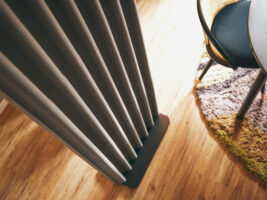
But if you were to set your mic up and acoustic up in front of something like the t.akustik Absorber Wall Modular 192, the absorbent hardened polyurethane soft foam surface of the wall would absorb a significant amount of those frequencies.
And because t.akustik’s absorber walls are modular, if you REALLY wanted to control your sound, you can even go further and combine several wall panels to create effectively a mini-recording booth in your own space, one that will absorb much of the extraneous sound from the room, and also minimise background noise.
And the best part is that when you’re not using it, the absorber can be broken down and stowed under a bed or in a cupboard – something that’s sure to go down well with anyone else using that space.
Even if your goals aren’t quite as ambitious, using something as small and contained as the t.akustik Desktop Absorber can make a significant difference to your recorded sounds – setting it up around your microphone as you play into it will still deaden the sound enough to elevate things significantly.
The great thing about the t.akustic range is that there are so many different acoustic treatment options – both temporary and permanent – to elevate your home studio space. If you’ve been wanting more out of your home recordings, these oft-overlooked but transformative pieces of kit are well worth a look.
Discover more at takustik.com
The post How to get better recorded guitar sounds at home with mobile absorbers appeared first on Guitar.com | All Things Guitar.
Source: www.guitar-bass.net