“The Stratocaster hasn’t really changed since 1954”: Outgoing Fender CEO Andy Mooney says electric guitarists have “generally been reluctant to really accept innovation”
Innovation in the guitar world certainly happens, but it’s often in small increments – updates to single components as opposed to radical new guitar designs altogether. Big changes do happen, mind; just look at the MIDI-enabled self-playing Circle Guitar which we recently called “the most revolutionary new guitar in half a century”.
There’s perhaps an argument to say that the electric guitar – at its core – is a pretty great technology, and that the infrequency of massively radical new designs is more a reflection that guitarists are just happy where things are.
READ MORE: Fender Vintera II Road Worn 60s Stratocaster review – “this guitar is like spending time with an old friend”
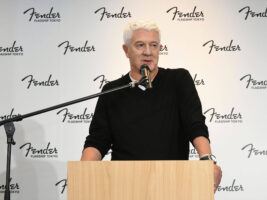
Outgoing Fender CEO Andy Mooney certainly has some insights, and in a new conversation with Guitar Center CEO Gabe Dalporto on his Inside the Noise podcast, speaks on the current demands of guitar players, and how things are different when it comes to amp innovation.
“Artists, generally, in the electric side, have been reluctant to really accept innovation,” Mooney says. “I mean, one of the guitars in my collection was a collaboration we did with Roland, which I thought was a very interesting guitar, but it didn’t attract an audience.
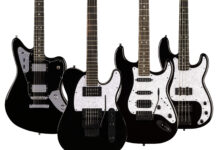
“I say to people that, you know, the Stratocaster hasn’t really changed since 1954. The only thing that’s changed is the neck, the frets, the pickups, the tremolo arm, and the paint application. And every one of those things, even the height of the frets, all are a reflection of what current artists are really demanding.”
He goes on: “On the amplifier side, it’s completely the opposite. Generally speaking, the player is now very receptive to digitisation. I know when I started using either digital foot pedals or digital amps, the quality just wasn’t there, and they developed a bad reputation. Now, when you listen to what’s capable with a digital amp and a digital signal chain, it’s actually amazing.”
In 2026, artists – particularly touring artists – are keener than ever to strip back their physical rigs to cut costs, and simply reduce the effort it requires to lug around a heavy, complex rig around on the road.
Many of the worlds’ top rock and metal artists have made the switch to digital amp modellers for live shows. Metallica guitar tech Chad Zaemisch even attributes the band’s improved live shows with their decision to do so. And in 2024, after saying he’d “never” use amp modellers, Slipknot’s Jim Root revealed he had been using a Neural DSP Quad Cortex live.
Mooney recognises this shift in player demand, too, adding: “In Eddie Van Halen’s day, he would have carted around 18 4x12s or nine heads. Now, people are moving towards a silent stage. Def Leppard are moving towards an entirely silent stage.”
Prior to his post at Fender, Andy Mooney worked at Disney as Chairman of Consumer Products. There, he gained invaluable insights from Steve Jobs, who was CEO of Pixar.
“We were a bit late coming to the party [with digital amp modellers],” he goes on. “But one of the things I learned from the conversations with Steve was that it’s okay to be second as long as you’re better.
“So when we looked at the Tone Master Pro again… Steve, one of the things he really did with his products was the user interface had to be so elegant that you didn’t need an owner’s manual, that you could take it straight out of the box, [and you] didn’t need an MIT degree to figure it out. So that’s what we tried to do with the Tone Master Pro, everything is intuitive.”
It was revealed this week that Andy Mooney is to step down from his position as CEO of Fender next month, with the company’s current President of its Asia-Pacific operations Edward “Bud” Cole to step into the role.
“Leading Fender has been a highlight of my career,” says Mooney. “I’m deeply grateful for the creativity and commitment of the Fender teams around the world and proud of what we’ve accomplished. I’m excited to pass the baton on to Bud and confident that under his leadership, Fender will continue to inspire players for generations to come.”
During his time as President of Fender Asia Pacific, Edward “Bud” Cole has overseen the expansion of Fender into 14 countries across the region including mainland China and Korea, established full regional commercial and operational capabilities, and played a pivotal role in numerous Made-in-Japan launches.
The post “The Stratocaster hasn’t really changed since 1954”: Outgoing Fender CEO Andy Mooney says electric guitarists have “generally been reluctant to really accept innovation” appeared first on Guitar.com | All Things Guitar.
Source: www.guitar-bass.net