Fender Player II Modified Telecaster – “this guitar just begs to be played for hours”
$1049.99/£949, fender.com
When Fender launched the Player II series last year, it felt like a significant leap forward in the quality and especially playability of the brand’s most affordable Mexico-made instruments.
READ MORE: PRS SE NF 53 review: “it might look like PRS’s Telecaster, but this is its own guitar”
Fender’s Ensenada factory guitars have also proved to be great modding platforms for pros and weekend warriors alike for decades now, and so it is that less than a year later, the Player II Modified range has sought to do the hard work for you.
Whether it’s Noiseless pickup-loaded Strats or Floyd Rose HSS offerings, the results have been pretty impressive so far – but can they say the same for Leo Fender’s original brilliant electric guitar design? Let’s find out…
Image: Adam Gasson
Fender Player II Modified Telecaster – what is it?
The original Player II Telecaster was a very impressive guitar as it is. And many of the original’s best features are kept for the Modified version – that means an alder body and maple neck with rosewood fingerboard, and yes those ‘board edges are nicely rolled just like the original. That neck is the same 9.5-inch radius’d C-shape as the Player II too.
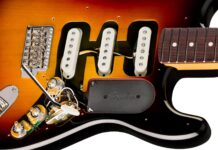
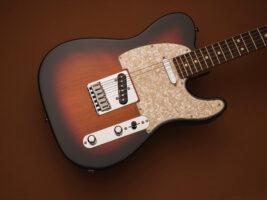
Another holdover on this test example is a three-colour sunburst finish, but unlike the vanilla Player II it’s accented rather nicely with a four-ply white pearloid pickguard to make it stand out from the rabble.
Under the hood, there’s a lot more going on, however. Most notably, you get a pair of Fender’s Player II Noiseless Tele units – which should come in handy for noisy environments – and more advanced wiring nestling in that body cavity.
In practice that means you get the ability to switch between series and parallel wiring, and there’s also a treble bleed circuit on the volume control to keep things clear and focused as you roll off.
You also get a set of Fender’s locking tuners to make string changes a doddle, while a soft-shell gigbag is included in the price here too – something that was notably absent from the basic Player II range.
Image: Adam Gasson
Fender Player II Modified Telecaster – feel and sounds
One of the chief concerns one might have when buying a conventional Telecaster, or any guitar with only single coils – at least if you are slightly more hard rock-inclined – is that the absence of a humbucker might prove inhibitive.
But thanks to the Player II Modified Telecaster’s push-pull tone pot-activated series mode – which utilises both the neck and bridge pickup at once in series – a sound is included in your palette which very effectively fills that humbucker void.
I’d class myself as a ‘recently country-curious’ player who primarily comes from a hard rock and metal background. With this in mind it’s a very pleasant surprise when I almost automatically dial in a high-gain tone and jam some quickfire palm-muted chugs in series mode.
Look, if you’re looking to venture into extreme metal territory you’re not going to find your perfect match here, but Player II Modified Tele definitely holds its own with heavier sounds with both pickups engaged – no doubt in part due to the Noiseless nature of the design. There’s a reason why Idles were involved in the marketing campaign for these instruments.
Image: Adam Gasson
Fun side note, though: there’s a space between the series-on and series-off settings on the push-pull tone knob where signal is cut entirely, so the more creative among you might be able to use it as a makeshift killswitch and channel your inner Tom Morello.
Moving into the sort of tones that you’d probably expect this guitar to handle, here the pickups show their versatility and their quality – with the Noiseless factor adding real punch and clarity to blues, country and rock licks.
The bridge pickup boasts that classic Tele twang, while the neck pickup has a gloriously warm tone, while retaining a level of articulation by which the guitar just begs to be played for hours.
The treble bleed circuit is another really useful extra tool to have in your arsenal when you’re indulging in grittier tones. The ability to roll off the volume and clean things up without losing clarity adds another string to this versatile instrument’s bow.
If there’s one slight bugbear I have with the guitar straight out of the box, it’s that the action is a little high to really get the most out of the playability. It’s a relatively easy fix that any half-decent tech can handle if you’re not confident with doing it yourself of course, but it’s still suboptimal.
Otherwise, the general fit and finish of everything is truly top class – there are zero noticeable visual hiccups or sloppiness. The neck itself is effortlessly smooth, with those rolled edges really enhancing things again, and it really does feel every bit the road-ready pro instrument.
Image: Adam Gasson
Fender Player II Modified Telecaster – should I buy one?
Fender has expended a fair bit of energy catering to their ‘pro’ market in the shape of the American Ultra II and Ultra Luxe guitars, but those instruments are also priced at a level that many ordinary working musicians can’t really consider.
So for that reason alone, it’s great then that the Player II Modified exists. The standard Player II Telecaster will be plenty of instrument for many players, but if your needs are a little more unconventional and you venture into the heavier spectrum of sounds, this Modified version will be right up your street.
Fender Player II Modified Telecaster – alternatives
You could, of course, go for a non-modified, standard Player II Telecaster (from $839.99/£709) if you’re not overly fussed about the series mode, treble bleed circuit or locking tuners. The previous iteration of the Modified concept was the Player Plus range, and you can still find them kicking around with a healthy discount – they’ll also give you Noiseless pickups and those lovely rolled fingerboard edges.
The post Fender Player II Modified Telecaster – “this guitar just begs to be played for hours” appeared first on Guitar.com | All Things Guitar.
Source: www.guitar-bass.net