“It had to be shiny and sparkling”: Inside Björn Ulvaeus’s wacky Eurovision 1974 star guitar
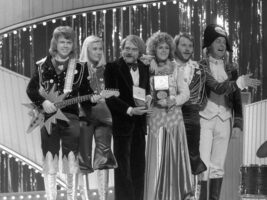
ABBA delivered a performance for the ages when they took the stage at the Eurovision Song Contest 1974 with Waterloo. The band’s glam styling became instant pop iconography, and central to that image was the outrageous-looking 13-pointed, silver star guitar slung over the shoulder of lead guitarist Björn Ulvaeus.
The instrument quickly became part of ABBA’s visual identity, but its origins have long been misunderstood. For years, many assumed it was a custom build from Hagström, the Swedish brand Ulvaeus frequently played. In reality, the flamboyant guitar was crafted by Stockholm luthier Göran Malmberg.
In a new interview with Guitar World, Malmberg details how the now-legendary guitar was conceived and completed under intense time pressure ahead of the Brighton contest – and why it had to be, in his words, “shiny and sparkling”.
READ MORE: Gibson Custom Shop recreates Mick Ronson’s David Bowie-era Les Paul with super limited run
According to Malmberg, Ulvaeus approached him with just six weeks to go before Eurovision. The brief was simple: create something visually arresting enough to match ABBA’s glam aesthetic.
“Björn and I met and discussed what it could look like,” Malmberg recalls. “It had to be shiny and sparkling, so a star shape was suggested. We decided I would draw some drafts of the guitar and then show them to him. Björn approved one of them, but there was only six weeks left until Eurovision!”
With the design agreed, construction began immediately. A Stratocaster-style neck was selected, but the radical 13-point body required careful engineering to avoid the pitfalls that often plague extreme shapes.
“The body had to have the correct weight balance so that the guitar would remain in position, even if Björn released his grip on the neck,” Malmberg explains. “Furthermore, the tips of the star shape could not be in the way when he was using it.”
To prevent the sharp points from breaking, the body was built from several layers of plywood glued together. The outermost layers were 1mm birch plywood aka “airplane plywood”, chosen to minimise surface cracking in the finish. Particular care was also taken to ensure the guitar would remain balanced on a strap, even if Ulvaeus released the neck mid-performance.
“The extra-long horn provided the balance for the attachment of the shoulder strap, and there were two horns on each side of the guitar’s body,” says Malmberg. “The placement of the control knobs and the cutaway horns helped to counter the weight, too.”
As for electronics, Malmberg says he “mounted the humbuckers, especially the treble pickup, further from the bridge to get a slightly darker sound, suitable for rhythm guitar playing.”
Finally, the finishing touches delivered the show-stopping effect Ulvaeus had requested. “The guitar was lacquered with metal stain on a silver base, and 20 layers of clear lacquer were used,” Malmberg says – ensuring it would gleam under the Eurovision stage lights.
While the exact inspiration behind the star design remains unclear, some have pointed to the influence of British glam-rockers The Glitter Band, who toured Sweden shortly before Eurovision and were known for their own star-shaped instruments.
“The Glitter Band did a tour of Sweden, and this band came to see us play; they told us they really liked our music and that it was really good,” bassist John Springate previously revealed. “Then, three weeks later, we saw them on Eurovision, dressed like us, with a star guitar, and that was ABBA!”
The post “It had to be shiny and sparkling”: Inside Björn Ulvaeus’s wacky Eurovision 1974 star guitar appeared first on Guitar.com | All Things Guitar.
Source: www.guitar-bass.net