The Lutefish Stream is a remote jamming solution that actually works
Ad feature with Lutefish
Remote jamming is a phrase that incites a certain degree of scepticism – with a lot of solutions, the latency is inevitably too high thanks to lengthy processing delays. But the Lutefish stream is a new solution that aims to get around the normal roadblocks and offer a super low-latency experience while you jam with musicians hundreds of miles away.
What is the Lutefish Stream?
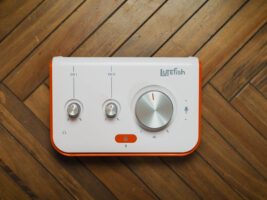
The Lutefish Stream is a pretty straightforward unit. To some degree it resembles an audio interface, but it is by no means a traditional one. Each bandmate requires a Stream, and can easily connect their instrument either direct or via microphones – there are two mono combo XLR/¼” inputs with individual gain controls, two headphone outputs for your preferred connector size, an overall master volume and finally a talkback mic to communicate with your bandmates.
So, why a hardware solution as opposed to software that uses your own interface? Rather working like a traditional interface, the Lutefish Stream instead uses a direct ethernet connection, straight into your router – which is what lets it achieve such low latency. Going direct via ethernet means the minimum possible delay in sending the digitised audio stream – no lag is added by unstable WiFi connections or your computer’s audio processing path.
With a good connection, the Stream’s latency can be around 3ms. Sound travels through air at roughly one metre per millisecond – and so a 3ms delay is about what you’d get from just standing on the other side of the room to the rest of your band.
All of the audio is routed through this connection, including the talkback mic. This allows for seamless, lag-free chats alongside your practice session. The video call for a session is sent separately through your laptop or phone’s own connection, which keeps as much bandwidth as possible available for the audio stream.
To the test
I put the Lutefish Stream to the test with the help of my band Epimetheus. Gathered in different practice spaces, we connected everything up and joined the session. I was worried that remote jamming of any kind would be pretty obstructive to our music – we play downtuned shoegaze that occasionally veers totally off-piste, or at least I do, while the rhythm section keeps things grounded. We don’t play to a click or backing tracks, and we often rely on cueing each other back in for different sections – so we really need to be in sync!
However the Lutefish Stream handled it all with aplomb! Remote jamming is never going to feel exactly like you’re in the same room, mainly because you’re hearing everything through headphones – but the latency was so low it felt really great playing with my bandmates. Check out the video to see for yourself!
The benefits of a solution like this really speak for themselves – there are lots of reasons why you might not be able to all get into the same room and practice as often as you’d like. And thanks to Lutefish’s network of musicians, once you have a stream you can also start connecting with a load of other players and expand your musical horizons.
The Lutefish Stream is by no means a complete replacement for playing in a room together, however it’s a great solution for those of us who find life getting in the way of music. It lets you work to a more flexible schedule, and spend more time playing – and less time lugging gear across your city.
Find out more about Lutefish at lutefish.com.
The post The Lutefish Stream is a remote jamming solution that actually works appeared first on Guitar.com | All Things Guitar.
Source: www.guitar-bass.net