Guitar Center CEO says they’ve turned their stores into “a theme park for musicians”
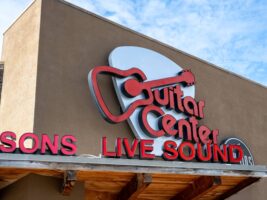
Guitar Center CEO Gabe Dalporto wants its stores to be “a theme park for musicians”. It might sound like a fairly ambitious way to describe a chain of music shops, but the company has been putting that idea into practice, creating spaces where musicians can stick around, try out gear and connect with other players.
And so far, the numbers suggest the strategy is working. Guitar Center has recorded nine consecutive quarters of positive growth, with its most recent quarterly sales up 5.2% to $635 million [via Bloomberg]. Time spent across the brand’s roughly 300 stores is also up 16% year over year, while foot traffic has increased for the first time in more than a decade.
Much of that turnaround comes down to a fairly simple idea: make Guitar Center a place where people “want to come and play”.
READ MORE: These are the best deals at Guitar Center this week
Speaking to Modern Retail, Dalporto – a guitarist himself – says the company had drifted away from its core audience before he became CEO in 2023. Around 70% of its merchandise was made up of lower-end, entry-level products, despite its most dedicated customers being musicians for whom playing music is “a big part of their identity”.
Guitar Center has since flipped that ratio, with around 70% of its inventory now aimed at “serious musicians”. But it isn’t just about filling the stores with more expensive gear. The company has also made its instruments easier to try, moving guitars and keyboards to eye level, unlocking them and setting them up so customers can actually play.
“If you’re trying guitars, you’re going to try 10 or 15 of them before you find the one you like,” Dalporto says. “Imagine just the terrible experience that is [when products aren’t immediately available].”
The retailer has also put more emphasis on knowledgeable staff after previously scaling back employee training. The result, says Dalporto, is an “experiential environment, with knowledgeable people and great products”.
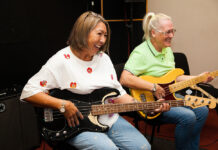
That experience doesn’t stop at the guitar wall. Guitar Center now runs monthly workshops covering subjects such as modifying guitars and building pedalboards, while individual stores have hosted events with musicians and producers including Smashing Pumpkins guitarist Kiki Wong and producer Zaytoven.
For Dalporto, those events are also a way to make Guitar Center feel like a local music shop rather than a standardised retail chain.
“What we’re trying to do is to engage with all the incredible local musicians in all of our markets locally and provide a national stage for them,” the exec says. “The last thing we want to be is Best Buy – a completely and utterly standardised national box retailer. We want to feel like the local music store who has deep personal connections with local artists.”
That same musician-first approach is now feeding into Guitar Center’s own gear. The retailer is developing a new private-label guitar, but Dalporto isn’t interested in simply slapping the Guitar Center name on another familiar design.
Staffers initially suggested making a version of a Fender Telecaster but Dalporto believes “the last thing the world needs is another Telecaster.”
Instead, the company is asking guitarists what they actually want from a modern instrument through its r/GuitarLab subreddit, where Dalporto and Guitar Center engineers have been gathering feedback on everything from hardware and controls to players’ frustrations with existing guitars.
The retailer is also experimenting with AI, although again with the aim of supporting musicians rather than replacing the human element. Earlier this year, Guitar Center launched Rig Advisor, an AI tool that can answer questions such as, “I want to sound like Jimi Hendrix on Purple Haze. What should I play?” The company is also giving employees access to ChatGPT and using AI to help train staff and improve its guitar-lesson operations.
Still, Guitar Center’s turnaround is far from complete. The company continues to carry significant debt and while the wider guitar market is dealing with pressure from tariffs and shifting consumer spending. But Dalporto believes the retailer has an advantage that online stores can’t easily replicate: giving musicians somewhere to try gear, meet other players and simply hang out.
“We don’t want to be the place where you just come and buy your string instruments and leave,” he says. “We want to be the place where you feel comfortable hanging out, playing [guitar], forming bands. … We’ve invested hugely in making Guitar Center a theme park for musicians.”
The post Guitar Center CEO says they’ve turned their stores into “a theme park for musicians” appeared first on Guitar.com | All Things Guitar.
Source: www.guitar-bass.net