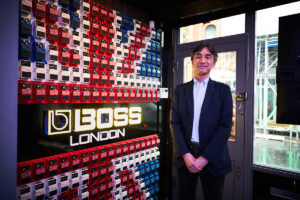
Interview with Masahiro Minowa CEO and Representative Director Roland Corporation
You’ve now spent many years with Roland and today lead one of the most influential brands in music technology. What first attracted you to the company, and did you ever imagine becoming CEO?
What attracted me to Roland from the beginning was the company’s unique combination of technology and creativity. We are not simply manufacturing products; we are creating tools that help people express themselves. That mission resonated with me when I joined the company, and it still does today.
As for becoming CEO, honestly, that was never my goal. My focus was always on contributing through product development and innovation. Over the years, I was fortunate to work with talented colleagues around the world, and those experiences ultimately prepared me for this role. Leading Roland is both a great responsibility and a privilege.
Roland is celebrating ten years since The Future. Redefined. Looking back, what stands out to you as the most significant changes in the musical instrument industry over that period?
When we launched The Future. Redefined. in 2016, it reflected a belief that musicians’ expectations were changing and that our industry needed to think differently about innovation. Looking back, I believe that prediction was correct.
Over the last decade, we have seen music creation become more accessible, more connected, and more continuous. Instruments are no longer viewed only as standalone products. Musicians increasingly expect experiences that extend into learning, personalisation, content, software and community.
What stands out most is that the relationship between companies and customers has become ongoing rather than transactional. In many ways, that shift has been just as important as any technological breakthrough. At Roland, it continues to shape how we think about product development and customer experience today.
The original The Future. Redefined. 909 Day event introduced products that went on to define entire categories for Roland. Were there any launches from that era that surprised you in terms of their long-term impact?
Several products exceeded even our own expectations. What surprised me most was how deeply musicians embraced instruments that combined classic Roland heritage with modern workflows.
Products inspired by iconic instruments such as the TR-909, TB-303 and JUPITER series proved that innovation and legacy can coexist. Their impact extended well beyond existing Roland users and inspired entirely new generations of creators.
Roland has always balanced innovation with heritage. How do you ensure the company continues to evolve while staying true to the values that musicians associate with the brand?
For us, heritage is not about preserving the past exactly as it was. It is about understanding why certain products became meaningful to musicians in the first place.
We constantly ask ourselves how we can preserve the spirit of creativity, reliability and musical inspiration while applying today’s technologies. If a new product helps musicians achieve something meaningful, while reflecting those core values, then we believe we are staying true to the Roland legacy.
One theme of the anniversary campaign is “Then. Now. Next.” What does the “Now” chapter of Roland’s story look like from your perspective?
For me, the “Now” chapter represents the continuation of the vision behind The Future. Redefined.
Ten years ago, we introduced new product categories, technologies, and ways for musicians to interact with instruments. Many of those innovations, including Aerophone, Katana, modern V-Drums technologies and Roland Cloud integration, went on to become important parts of both our business and the wider industry.
Today, we are that vision beyond the instrument itself. We want to create richer experiences before, during and after musicians play. That means combining world-class hardware with digital tools, educational content, connected services, and ongoing engagement.
In many ways, “Now” is where the ideas behind The Future. Redefined. evolve into a broader ecosystem that supports musicians throughout their creative journey.
We’re seeing instruments become increasingly connected through apps, cloud services and online learning experiences. How do you think these developments are changing the relationship between musicians and their instruments?
Historically, the relationship between a musician and an instrument was defined by the moments they spent playing together.
Connected technologies extend that relationship far beyond those moments.
Today, an instrument can help musicians learn new techniques, discover new sounds, access lessons, track their progress, and connect with communities around the world. The instrument becomes a creative companion rather than simply a device.
Importantly, this does not replace the emotional connection musicians feel with their instruments. It strengthens it by making music-making more accessible, more engaging, and more rewarding over time.
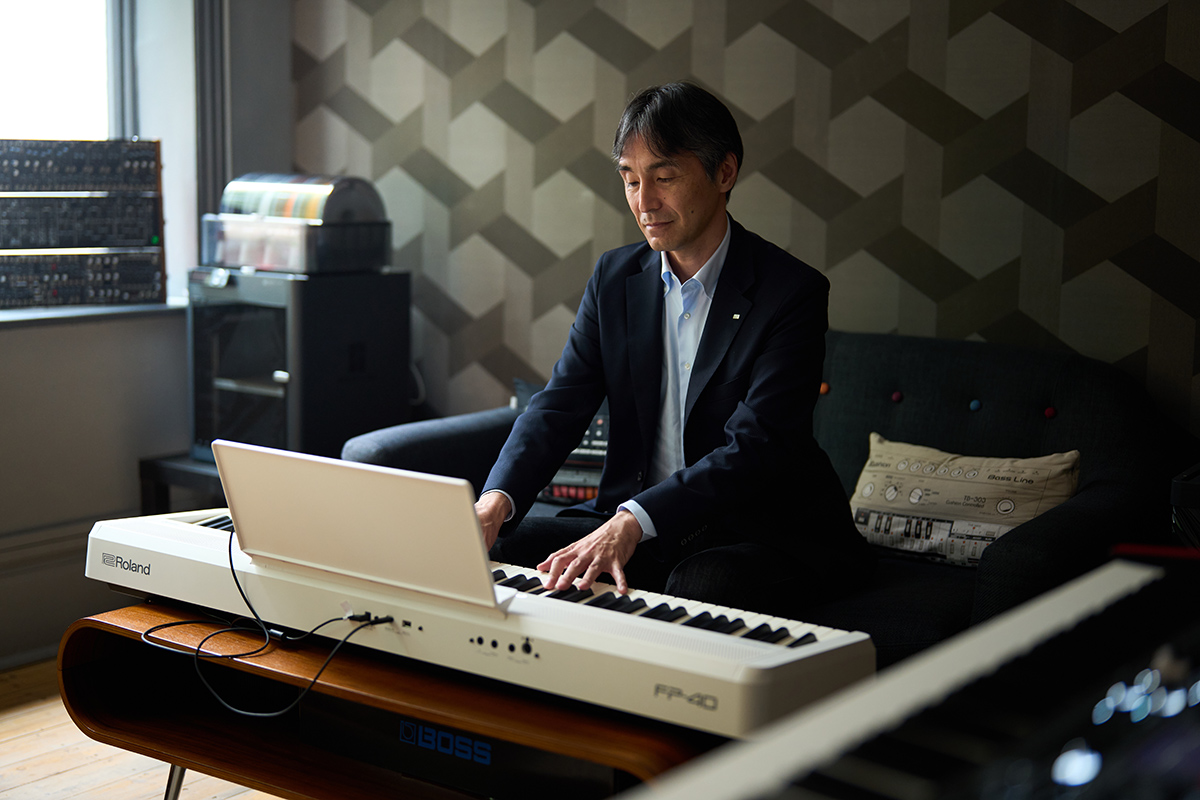
The recently announced FP-40 with Piano Sphere is an example of Roland combining hardware with digital services and learning tools. How important do you believe connected experiences will be to the future of music-making?
I believe they will be fundamental.
One of the lessons from The Future. Redefined. was that innovation is not simply about introducing new products. It is about finding new ways to create value for musicians and build lasting relationships with them.
The FP-40 with Piano Sphere is a good example of that thinking in action. As Roland’s first piano with built-in Wi-Fi, it was designed not only as an instrument, but also as part of a connected ecosystem that supports players throughout their musical journey. Through Piano Sphere, users can access guided learning, real-time feedback, popular songs and personalised development tools, while the platform itself can continue to evolve through wireless updates and new services over time.
This approach is closely aligned with our Direct Connect strategy. We want to move beyond a traditional product relationship and provide experiences that help inspire people to start playing, stay motivated, continue improving and enjoy music for years to come.
Looking ahead, the opportunity is not simply to connect instruments to the internet. It is to connect more deeply with our customers and support creativity, learning, and musical enjoyment at every stage of life.
Roland’s products are used by beginners, hobbyists, educators and professional artists around the world. What do you think the industry needs to do to encourage the next generation of musicians and creators?
Accessibility is key.
We must reduce barriers to entry by making instruments more approachable, learning resources more engaging and creative opportunities more visible. Young people today have incredible creative potential, but they also have many competing interests and distractions.
The industry should focus on inspiring curiosity and making music creation rewarding from the very first experience. If someone’s first experience of making music is enjoyable, they are much more likely to continue their journey.
Looking ahead, what areas of innovation are you personally most excited about, whether in instruments, customer experience or the broader music ecosystem?
What excites me most is the opportunity to help more people connect, express themselves, and share their passion through music.
Whether through intelligent learning tools, personalised experiences, connected services or entirely new forms of musical interaction, technology is giving us opportunities to help more people participate in music than ever before.
We are entering an era in which physical instruments and digital experiences can complement one another seamlessly. I believe the companies that succeed will be those that make technology feel natural, intuitive, and inspiring.
For Roland, the goal remains the same as it has always been: helping people experience the joy of playing music. The tools may evolve, but that mission remains constant.
Finally, when people look back on this period in Roland’s history ten years from now, what would you most like people to say the company achieved?
I hope they would say that Roland built on the legacy of The Future. Redefined. while helping shape what came next for musicians and the industry.
Ten years ago, we introduced innovations that went on to define new categories and reshape how musicians interacted with technology. Today, we are focused on expanding that impact through connected experiences, digital ecosystems and new opportunities for creativity.
If people look back and say that Roland helped make music creation more accessible, more engaging and more connected for musicians around the world, I would consider that a success.
More than anything, I hope they say that Roland remained true to its belief that instruments should inspire a lifelong creative journey, and that we helped more people experience the joy of playing music than ever before.
The post Interview with Masahiro Minowa CEO and Representative Director Roland Corporation appeared first on Music Instrument News.
Source: musicinstrumentnews.co.uk