The history of pinched harmonics, divebombs and squeelies
The pinched harmonic is a technique unique to the guitar. Other stringed instruments can create a similar, ghostly tone that a guitar can by striking a string without depressing the string to fret it, but the squealy, cutting tone of a pinched harmonic? That’s a guitar technique, and something that has stayed fairly rooted in blues, rock and metal since its inception.
READ MORE: The 15 Most Expensive Guitars Sold At Auction
A natural harmonic creates a ghostly, soft tone, and generally works best at only a handful of intervals along the neck. The pinched harmonic, with enough gusto, can be performed anywhere. Its extensive use in heavy metal genres has led to various other harmonic based techniques, used by famous guitar players like Eddie Van Halen, Zakk Wylde and the late Dimebag Darrell.
The pinched harmonic – aka pinch harmonic, the squealie, or any other manner of nicknames – is performed by striking a string, generally with a plectrum, before your thumb follows through and creates an artificial harmonic by striking the string as well.
Much easier to perform with some distortion, the modern pinch harmonic is used broadly in modern metal, in either rhythm playing like Kublai Khan’s Antpile or in lead playing by people like Zakk Wylde who, despite using them extensively, doesn’t overdo it.
Blues Beginnings
The origins of the pinched harmonic are usually attributed to blues-rock pioneer Roy Buchanan in the 50s. Buchanan’s song Potato Peeler features a few vocal-like pinched harmonics in its solos, settling in amongst a horn solo in the two and a half minute instrumental, the most notable squealing harmonic appearing about 50 seconds in.
The horn solo that follows uses some whistly, screaming tones, so the aggression of the harmonic on the guitar feels more at home. The sound appears just once, so whether it was an accidental moment of magic or not, a legend was born.
Inspired, Billy Gibbons of ZZ Top has used pinched harmonics throughout his career, again both in rhythm and lead playing. One of the solos in the Little Old Band from Texas’ La Grunge uses pinch harmonics almost exclusively, Billy scooping and pinching for a wholly expressive, scorching solo. Billy’s use bought the technique to the fore like never before.
Then, later 70s and 80s saw the late Eddie Van Halen using them across Van Halen solos and riffs, further cementing and refining the technique. Eddie’s use of unconventional techniques like tapping, harmonics and pick scrapes were so widely influential that they became a convention. Eddie’s mysterious techniques were so mesmerising that people couldn’t help but add them into their own music.
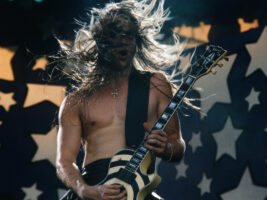
Eddie inspired a young Zakk Wylde, who pushed the technique to breaking point and really nailed it home as a heavy metal technique. Going far beyond the screech of Roy Buchanan and the wail of Billy Gibbons, Wylde’s pinches are loud, proud, and incredibly controlled, with particular focus on pinched harmonics on the lower strings. These yield a different character to those on higher strings, adding girth and impact to the technique.
Zakk has continued to inspire the heavy metal community in his work in the late Ozzy Osbourne’s band, Black Label Society and most recently, taking the place of another pinched harmonic master: Dimebag Darrell in Pantera.
Bombing Out
Dimebag’s own legacy features extensive use of harmonics in another form – divebombs. Divebombs are another trick used by heavy metal players to give solos a moment of crescendo as a natural harmonic rises from the depths of the lowest notes on the fretboard to otherworldly heights thanks to the harmonic elevating the sound a few octaves higher than the plucked note, as well as being aided by a tremolo bridge, often of a Floyd Rose style.
Dimebag’s own version, deemed a ‘Dimebomb’ by the man himself, is performed by ‘dumping’ the Floyd Rose so the strings are as floppy as possible, plucking a string and creating a harmonic, before allowing the strings to slowly return to tension and beyond— the harmonic slowly emerging from the rubble of the dumped string noise.
The divebomb came along a little later than the pinched harmonic, having been used extensively by Jimi Hendrix. Though not as exaggerated as the modern metal divebomb, Hendrix’s use of divebombs with his Stratocaster’s tremolo system added a new level of expression and vocal-like tonality to his playing. Rock and metal players exaggerated this and added either natural and pinched harmonics to dive down, and rise from the divebomb with a natural harmonic.
These soaring, squealing sounds have become a staple of rock and metal guitar, serving to excite the crowd as well as subvert their expectations, the squeal that emerges and cuts through a dense mix being an ear-catching moment in music. Mastering the technique can help build out your toolkit of sounds and noises when the moment strikes.
Rock Discipline
The pinched harmonic has stayed rooted firmly in rock since its inception in the 50s, its popularisation through the 70s and 80s into the modern day: a staple technique for rock and metal guitar players. The demanding squeal of a pinched harmonic is exciting and stands on its own, but when paired with a divebomb or other tremolo expression, can be used to elevate the performance to new heights.
Used extensively in lead playing by people like Eddie Van Halen and Billy Gibbons, the pinched harmonic has now been used as a tool in rhythm playing and riffs. The squealing sound sandwiched between low-noted chugs adds definition and dynamic to a riff, emphasising how heavy the notes that follow the harmonic are. Building on the technique, as experimental as rock and metal players are, has led to both the divebomb and ‘Dimebomb’, adding a new flavour beyond simply using a tremolo for vibrato or subtle pitch shifting and modulation.
Much like riding a bike, a pinched harmonic can be difficult to learn, but once you do your first, you never really forget.
The post The history of pinched harmonics, divebombs and squeelies appeared first on Guitar.com | All Things Guitar.
Source: www.guitar-bass.net